

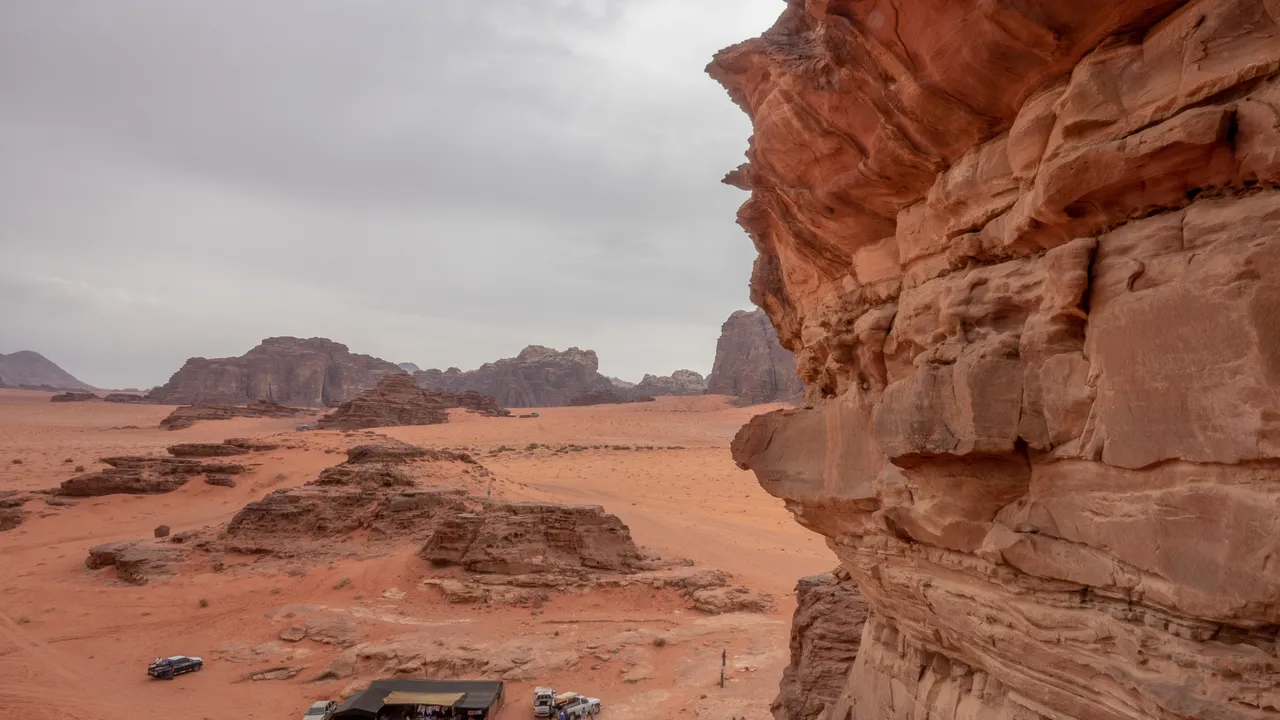
Wadi Rum is a protected desert area in southern Jordan, famous for its red and orange sand, sandstone mountains and huge open skies. It is listed by UNESCO as a World Heritage Site and is one of the most memorable places to spend a night in the country.
Fees and arrangements can change. Confirm current details with your camp or the visitor centre before you travel.
Where it is and how to get there
Wadi Rum is in the south of Jordan, roughly an hour's drive from Aqaba and around two hours from Petra by road. From Amman, plan for a drive of around four hours.
Most visitors arrive by:
- Private car or taxi from Aqaba or Petra — the most flexible option.
- Organised tour or transfer arranged with a camp or tour operator.
- Public bus services, which exist but are limited and not always convenient for tourists.
Visits start at the Wadi Rum Visitor Centre, where you pay the entrance fee, before continuing to Wadi Rum village, where most jeep tours and camp pick-ups begin.
Entrance fee
The entrance fee for foreign visitors is listed at 5 JOD. Entry to the protected area is included in the Jordan Pass, so if you've bought one, keep it ready.
What a typical visit looks like
The classic way to explore is by 4x4 jeep tour with a local Bedouin guide. Tours range from two hours to a full day and usually include stops such as rock bridges, canyons with ancient inscriptions, sand dunes and viewpoints for sunset.
Other options:
- Camel rides, usually shorter and slower-paced.
- Hiking and scrambling with a guide — some routes are demanding.
- Hot-air balloon flights, offered seasonally by licensed operators.
Staying overnight
Spending a night is what makes Wadi Rum special: the silence, the sunset over the rocks and a sky full of stars. Camps range from simple tents with shared bathrooms to comfortable "bubble" tents with private facilities.
When choosing a camp, check:
- What's included: transfers from the village, dinner, breakfast, tours.
- Recent reviews, especially about cleanliness and hosts.
- Whether the camp is inside the protected area or at its edge.
When to go
Spring (around March to May) and autumn (around September to November) usually bring the most comfortable temperatures. Summer days are very hot, and winter nights in the desert can be cold, so pack accordingly.
What to pack
- Layers: warm clothing for the evening, even after a hot day.
- Sun protection: hat, sunglasses, sunscreen.
- Comfortable closed shoes for sand and rocks.
- A headlamp or torch.
- Cash for small purchases and tips.
- Your passport — you may need it at the visitor centre.
Respect the desert
Wadi Rum is home to Bedouin communities and a fragile environment. Take your rubbish with you, ask before photographing people, dress modestly in the village and stay with your guide in remote areas.
Plan the rest of your trip
- A 7-Day Jordan Itinerary: Amman, Petra, Wadi Rum and the Dead Sea
- Aqaba Travel Guide: Red Sea Diving, Beaches and Day Trips
- What to Pack for Jordan: A Practical Packing List by Season

Comments & ratings
No comments yet. Be the first to share your view.